
Description
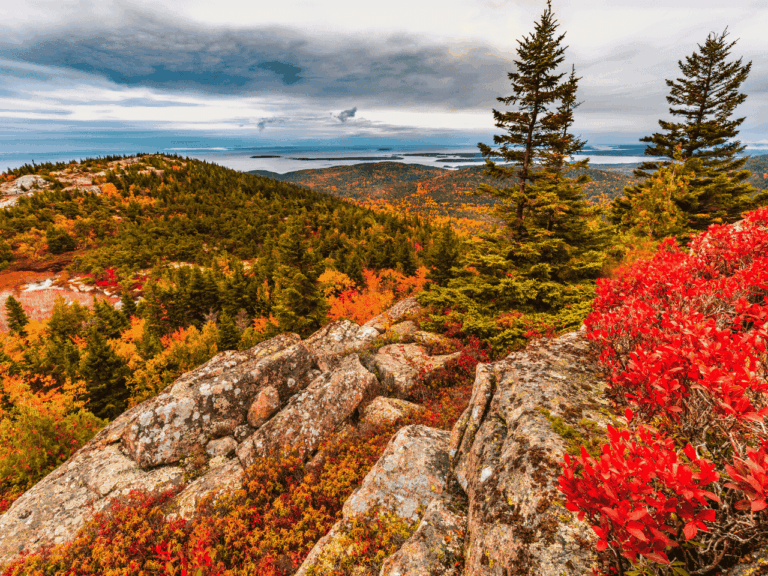
Acadia National Park protects the natural beauty of the highest rocky headlands along the Atlantic coastline of the United States, an abundance of habitats, and a rich cultural heritage. At 4 million visits a year, it’s one of the top 10 most-visited national parks in the United States. Visitors enjoy 27 miles of historic motor roads, 158 miles of hiking trails, and 45 miles of carriage roads.
Activities
Maps and Navigation
From Boston take I-95 north to Augusta, Maine, then Route 3 east to Ellsworth, and on to Mount Desert Island. For an alternate route, continue on I-95 north to Bangor, Maine, then take I-395 to U.S. Route 1A east to Ellsworth. In Ellsworth, take Route 3 to Mount Desert Island.
Weather Information
Located on Mount Desert Island in Maine, Acadia experiences all four seasons. Summer temperatures range from 45-90F (7-30C). Fall temperatures range from 30-70F (-1-21C). Typically the first frost is in mid-October and first snowfall begins in November and can continue through April with an average accumulation of 73 inches (185 cm). Winter temperatures range from 14-35F (-10 – 2C). Spring temperatures range from 30-70F (-1-21C).
Flora and Fauna
Acadia National Park’s plant life ranges from lichen, mosses, grasses, ferns, wildflowers, and fungi to towering deciduous and evergreen forests. Acadia is one of the most lichen-diverse national parks. Aquatic plants and marine algae also play vital roles in freshwater and coastal habitats.
Acadia National Park’s forests, mountains, wetlands, tidepools, and coastal waters provide critical habitats for hundreds of species. Therefore, Acadia National Park is home to a diversity of wildlife, from peregrine falcons, owls, warblers, woodpeckers, and loons to foxes, deer, bats, seals, whales, fish, reptiles, amphibians, and countless invertebrates.