Description
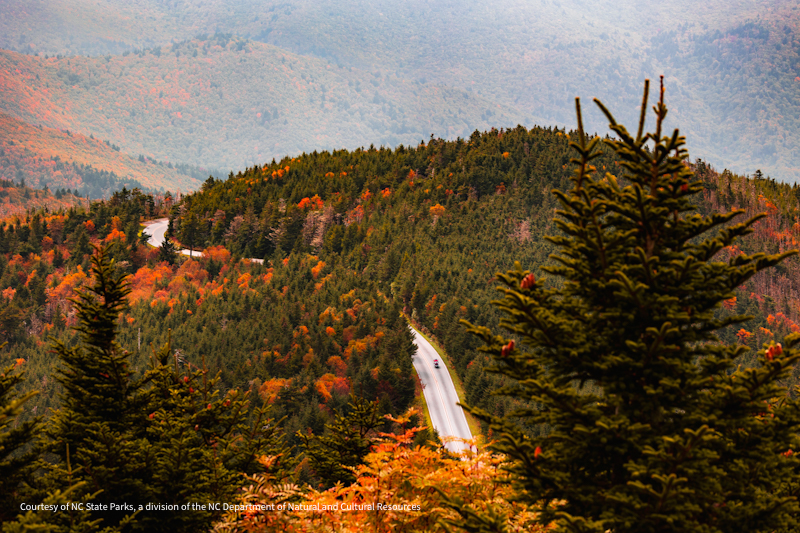
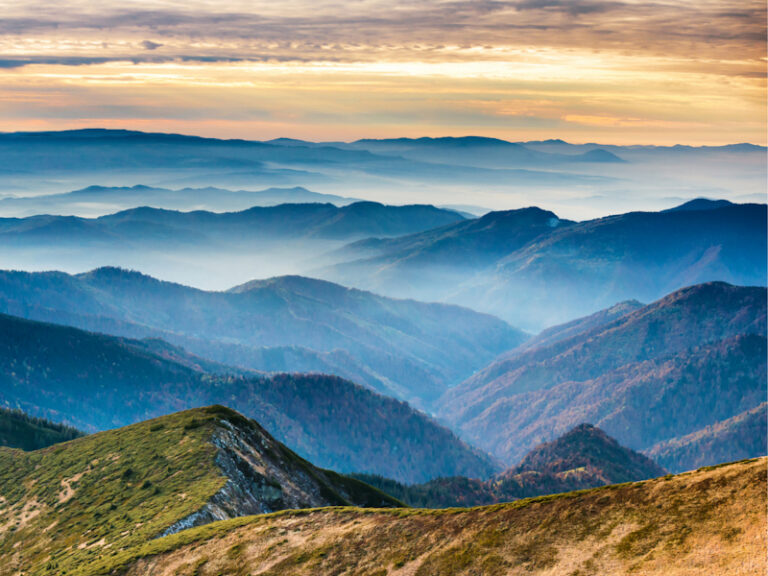
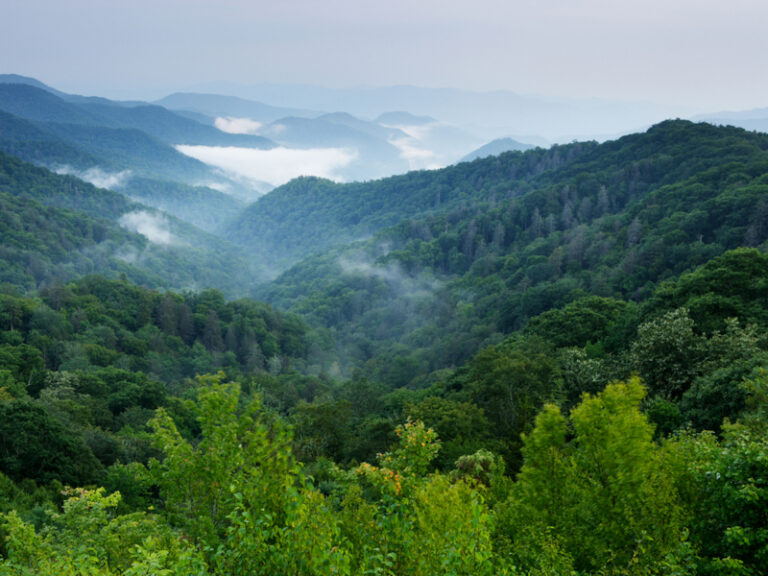
Ridge upon ridge of forest straddles the border between North Carolina and Tennessee in Great Smoky Mountains National Park. World renowned for its diversity of plant and animal life, the beauty of its ancient mountains, and the quality of its remnants of Southern Appalachian mountain culture, this is America’s most visited national park.
As part of the Appalachian mountains, the Great Smoky Mountains, or the Smokies, are one of America’s oldest mountain ranges forming approximately 200-300 million years ago. The Smokies run along the border of Tennesee and North Carolina in the Southeastern United States.
The 522,427 acres of Great Smoky Mountain National Park is relatively untouched and gives an idea of temperate flora before the influence of humans.
Great Smoky Mountains National Park is the most visited of the 59 national parks in the United States. In 2016 the park had 11.6 million recreational visitors while the second most visited, Grand Canyon, had 4.6 million visitors. The park is one of the world’s few International Biosphere Reserves and an UNESCO World Heritage Site.
The name “Smoky” comes from the fog that forms over the mountain range. The fog is caused by the mountain vegetation as the plants emit volatile organic compounds into the atmosphere. A fog begins to form due to the high volume of flora and fauna releasing a high concentration of these compounds. Unlike oxygen, these compounds have a high vapor pressure and easily form vapors at normal temperature and pressure which is why we can see it.
Activities
Maps and Navigation
Great Smoky Mountains National Park straddles the borders of the states of Tennessee and North Carolina. The three main entrances to the park are in Gatlinburg, TN; Townsend, TN; and Cherokee, NC.
Recreation
There are over 850 miles of hiking trails to explore. 70 miles of the Appalachian Trail run through Smoky Mountain National Park.
Other activities include fishing, camping, white water rafting, ziplining, winter sports, bicycling, birdwatching, stargazing, horseback riding, and trail running. An accessible way to see potential wildlife is by driving the Roaring Fork Motor Trail. The park also covers 522,427 acres with 238 miles of paved road and 146 miles of unpaved road.
Fees and Passes
The Great Smoky Mountains National Park does not have a park entrance fee. However, a paid parking pass is required if you plan to visit the park in a car and park for longer than 15 minutes. The pass can be purchased online at Recreation.gov.
Weather Information
Elevations in the park range from approximately 875 feet (267 meters) to 6,643 feet (2,025 meters) and the topography can drastically affect local weather. Temperatures can vary by 10-20 degrees Fahrenheit from mountain base to top, and clear skies lower down do not guarantee equally pleasant weather at higher elevations.
Flora and Fauna
Black Bears
Black bears are typically black in color but may also be brown or cinnamon. Male black bears weigh around 250 pounds while adult females are smaller weighing over 100 pounds. Bears may also double their weight by the fall. Bears over 600 pounds have been documented in Great Smoky Mountains National Park.
Black bears live at all elevations of Great Smoky Mountains National Park. There are an estimated 2,000 black bears at Great Smoky National Park—about two bears per square mile.
Black bears are able to climb trees, swim, and can run 30 mph/ 48 kph. Be sure to practice bear safety while adventuring outdoors.
Salamanders
The Great Smoky Mountains are known as the “Salamander Capital of the World.” The majority of vertebrate (backboned) animals, including humans, in the park on any given day are salamanders. Be on the look out for salamanders such as the marbled or spotted salamander. Hellbenders are the largest salamander species you’ll encounter in the Smokies.
There is also a species of salamander with red cheeks called the red-cheeked salamander whose entire population is mostly found primarily within Great Smoky Mountain National Park.
Lightning Bugs
The Smokies are home to a species of lightning bug, or firefly, called the photinus carolinus. During mating season, this species of firefly will flash a special lightning sequence to attract mates. The flashes will eventually sync up to have a synchronously flashing forest. Each year, Great Smoky Mountain National Park holds a lottery for entry into the park for a chance to see the synchronous lightning bugs. The synchronous lightning typically occurs in June. Learn more about the annual firefly viewing at the Great Smoky Mountains.
Birds
Warblers are the most diverse group of birds in the Smokies with over 30 different kinds. The Smokies are also home to the broad winged hawk, chimney swift, ruby-throated hummingbird, Acadian flycatcher, Tennessee warbler, tufted tit mouse, Carolina chickadee, golden crowned kinglet, and the scarlet tanager.
Other Animals
Other animals found in the Smoky Mountains are bobcats, bats, carolina flying squirrel, snakes, and elk. Copperhead and timber rattle snakes are the two venomous snake species found in the Smokies. Elk were reintroduced in 2001 and there are now around 200 elk in the Smoky Mountains.
Flora and Fungi
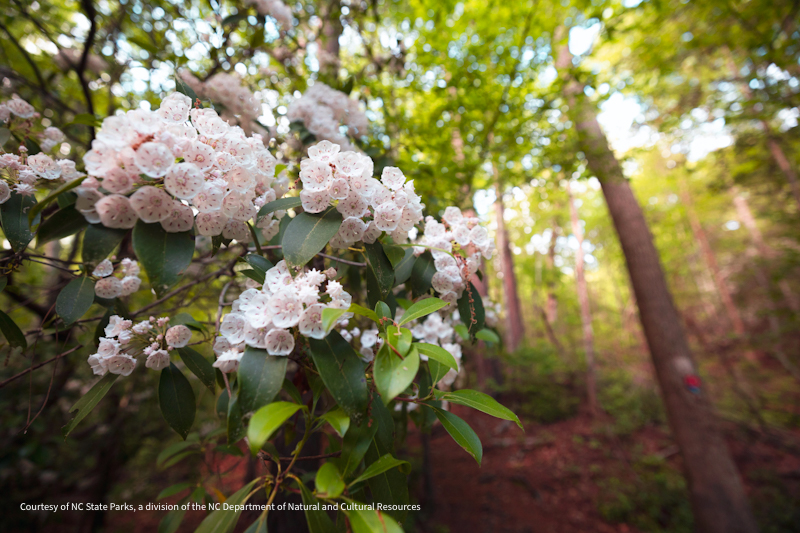
Great Smoky Mountains National Park has over 1,500 kinds of flowering plants more than in any other North American national park. Mountain laurel, rhododendron and flame azaleas are favorites to spot. Mountain laurel has pink and white flowers and bloom in early May through June. Catawba rhododendron, which lives primarily at elevations above 3,500’, reaches it peak of bloom in June. Rosebay rhododendron is in bloom at the lower elevations in June and at mid-elevations during July. Flame azaleas bloom at the low and mid-elevations in April and May.
Common trees, shrubs, and vines to look for include Fraser fir, red maple, yellow birch, blue beech, mockernut hickory, white ash, tuliptree, pitch pine, black cherry, white oak, moosewood, mountain maple, heart’s-a-busting, wild hydrangeas, mountain holly, buffalo-nut, and greenbrier.
Mushrooms found at Great Smoky Mountain National Park include species of amanita like amanita flavoconia and amanita fulva. Clitocybes, puffballs, russula, and species of ramaria have also been spotted.
Geography
Elevations in Great Smoky Mountain National Park range from approximately 875 feet at the mouth of Abrams Creek to 6,643 feet at Clingmans Dome. Sixteen mountains peaks exceed 6,000 feet in elevation.
Clingmans Dome, Mount Guyot, and Mount Le Conte are the three highest peaks.
Most of the rocks in Great Smoky Mountains National Park are sedimentary and were formed by accumulations of clay, silt, sand, gravel, and minor amounts of calcium carbonate in flat-lying layers.
In the Smokies high country, over 85″ of rain falls on average each year. During wet years, peaks like Mt. Le Conte and Clingmans Dome receive over eight feet of rain. There are 730 miles of fish-bearing streams and another 1,300 miles of tributaries.
Local Legends and Folklore
In Appalachian folklore, the Wampus cat is a half-woman, half-cat that haunts the Appalachian forest
The Wampus cat is also said to be a shape-shifting witch or a spirit guardian of the woods.
According to one Cherokee legend, a woman wore the skin of a wild cat to spy on a sacred men’s hunting ritual. When she was discovered, she was cursed to wander the forest as a half-cat, half-woman creature for eternity. Some believe the Wampus cat is responsible for strange sounds in the wilderness.